Click images below to learn more about Black History in Knoxville
Noted Knoxvillians and Knoxville Connections


 |
ROBERT BOOKER

Remembering Bob Booker
(April 14, 1935 - February 22, 2024)
Excerpts from Booker's obituary:
Dr. Robert J. Booker was born, April 14, 1935, in Knoxville, Tennessee. He passed away peacefully at his home, February 22, 2024, surrounded by loved ones. Dr. Booker was the son of Willie Edward Booker and Lilian Allen Booker and was a lifelong member of Tabernacle Baptist Church.
He graduated from Austin High School in 1953 and served for three years in the U.S. Army in France and England as an information education specialist. In 1962, he received his degree from Knoxville College, where he was a two-term president of the student body. As a student leader, Dr. Booker helped initiate and conduct the sit-in movement in Knoxville to desegregate downtown lunch counters and movie theaters. During his freshman year, he was elected president of the campus chapter of the NAACP.
In 1967, Dr. Booker became the first Black person ever elected from Knoxville to the State Legislature. He served a total of seven years as administrative assistant to Mayor Kyle Testerman of Knoxville. Dr. Booker was appointed by Governor Lamar Alexander as the first Black person to serve on the Tennessee Civil Service Commission.
Dr. Booker was the executive director of the Beck Cultural Exchange Center for seventeen years and was still working as a historian and archivist until his death. He was the founding president of the National Austin High School Alumni Association. From 1987 to 1991, Dr. Booker wrote a weekly column for the old Knoxville Journal, and since 2003, he has written a weekly column for the Knoxville News Sentinel. For nearly forty years, Dr. Booker conducted extensive research on the history of East Tennessee and authored numerous books.
Dr. Booker pledged Phi Beta Sigma Fraternity at Knoxville College. He was a member of the Distinguished Service Chapter, the fraternity’s highest honor.
During a formal ceremony, Saturday, February 10, 2024, the University of Tennessee Board of Trustees upon the recommendation of the faculty and by authority granted to the President and Chancellor, conferred on Robert J. Booker the degree of Doctor of Humanities.
Learn More about Booker at the Knoxville History Project
Bob Booker Recalls Entertainment Venues in Segregated Knoxville

To say that Robert J. “Bob” Booker is busy in February is an understatement.
The author, historian, Knoxville College graduate, military veteran, former state legislator and co-founder of the Beck Cultural Center is a priceless resource for stories and details of Knoxville history, especially the history of the African-American residents who have shaped our city. It stands to reason that his calendar is booked solid during Black History Month with interviews, speaking engagements, and book signings—all on top of the deadlines for his regular columns published in the News Sentinel.
When Booker generously granted some of his time to talk with the City’s Communications staff, he answered our questions about a variety of city government-related figures, places and events. He shared memories of living in segregated Knoxville, when African-American residents were required by law and convention to use separate entrances to businesses—if they were permitted to patronize those businesses at all.
Booker recalled that, when he was a child, his neighborhood included both black and white families, and he and his playmates didn’t much differentiate when it came to playing in the yards and streets. But a difference was notable when they went to see a movie downtown. .
Read More
Listen to Bob Booker Talk About Live Music at Chilhowee Park
Historian Robert J. "Bob" Booker spoke to City of Knoxville communications staff about seeing live music at the Jacob Building at Chilhowee Park, when audiences were racially segregated.
Listen to Bob Booker Talk About Seeing Movies in Segregated Knoxville
Historian Robert J. "Bob" Booker spoke to City of Knoxville communications staff about going to the Bijou Theatre as a boy to see a movie with his white friends and using different entrances.
In His Own Words: Robert 'Bob' Booker's journey of activism, service in Knoxville
His mother was a maid and his father worked on cars. But Booker would grow up to become an activist, an author, and Knoxville's first black TN State Representative.
Watch the Video on WBIR.com
Booker Honored by Knoxville History Project

The Knoxville History Project honored Robert J. Booker on April 17, 2018 for his significant contributions to recording and preserving the history and culture of Knoxville.
Booker grew up in the “Bottom” area of East Knoxville, and graduated from Austin High School in 1953. Following a three year stint in the U.S. Army, stationed in France and England, Booker returned to his hometown to study at Knoxville College on the G.I. Bill, graduating in 1962 with a B.S. in Education. At Knoxville College, as a two-term president of the student body, Booker became involved in Knoxville’s Civil Rights movement, organizing sit-ins to advance desegregation.
In 1966 he was elected as Knoxville’s first black Tennessee State Representative. In the 1970’s he served as administrative assistant to Mayor Kyle Testerman, and on the Tennessee Civil Service Commission. Later he served on Knoxville City Council. For 11 years, he was the executive director for the Beck Cultural Exchange Center.
Read More |
Listen to Historian & Civil Rights Activist Robert J. "Bob" Booker Talk About Cal Johnson
Booker's New Book Traces Black Experience in Knoxville
Booker's book titled "An Encyclopedia: Experiences of Black People in Knoxville, Tennessee 1844-1974," goes into detail on various subjects of Knoxville's history.
The book is available for $20 at the Beck Cultural Center, 1927 Dandridge Ave. and the East Tennessee History Center, 601 S. Gay St.
Read More
The Lost World of East Knoxville: A Walk with Bob Booker
Video by TAMIS
CHARLES CANSLER
Charles Cansler: Knoxville's First African American Author to Receive National Attention for a Book Exploring His African American Roots

May 2021 marked the sesquicentennial birthday of a Knoxville African American educator and author named Charles Cansler.
Cansler was born on May 15, 1871 (a day prior to what would one day become National Biographer’s Day). He would be memorable just as a teacher. He was the longtime principal of old Austin High, Knoxville's high school for Black students. He led the establishment of Knoxville's Carnegie Library, the city's only library for African Americans, in 1917.
And he has a footnote in art history.
One of his students at Austin High, about the same time he was working on the public-library project, was an especially talented teenager named Beauford Delaney, who within 20 years was drawing national praise for his colorfully imaginative works on canvas, in a career that would take him from New York to Paris. One of Delaney's first known works was a becoming portrait of his principal, Charles Cansler. Its whereabouts are unknown.
Read More at VisitKnoxville.com
Charles Cansler Family Reunion
Below is a photo from a Charles Cansler family reunion. Photo is located at the Beck Cultural Center. Learn more at BeckCenter.net.

BEAUFORD DELANEY
KMA Exhibit Salutes Delaney's Pioneering Work
Curator Stephen Wicks from the Knoxville Museum of Art (KMA) discusses the significance of Beauford Delaney's art.

Knoxville native Beauford Delaney is revered internationally for his work as a 20th century artist. He is best known for his modernist style of painting, which often featured scenes of New York streets and jazz clubs and well-known African-American figures.
He has often been referred to as one of the most important African-American artists of the mid-20th century.
Yet despite his immense artistic contributions and recognition of his work in Paris, Delaney is often underappreciated in his hometown.
Delaney was born here on Dec. 30, 1901. He and his brother Joseph began jobs as sign painters when they were teenagers.
Their talent as painters gained the attention of Knoxville’s most well-known and first professional full-time artist, Lloyd Branson, who became Delaney’s mentor. Under Branson’s guidance, Delaney left Knoxville for Boston to study at the Massachusetts Normal School, the South Boston School of Art, and the Copley Society.
In 1929, Delaney landed in New York, where he befriended other prominent artists such as Georgia O’Keeffe, Stuart Davis, Henry Miller and writer James Baldwin. Baldwin, who formed a special relationship with Delaney that lasted 38 years, encouraged Delaney to go to Paris, where he remained until his death in 1979.

The Knoxville Museum of Art is currently featuring an exhibit,
"Beauford Delaney and James Baldwin: Through the Unusual Door." The free-admission exhibit will run through May 10, 2020, and features more than 50 paintings, works on paper, unpublished material and papers rarely seen that are owned by the Delaney estate.
The Knoxville museum holds the world’s largest public collection of Delaney’s work, organized by museum curator Stephen Wicks, who says Delaney is “widely considered to be one of America’s great, modern artists of the 20th century."
- By Communications intern Kelsey McDonald


NIKKI GIOVANNI
 Remembering Nikki Giovanni
(June 7, 1943-December 9, 2024)
Knoxville lost a powerful voice with the passing of our very own Nikki Giovanni on Dec. 9, 2024. Her legacy will live on among the many writers and readers she cultivated, inspired, and delighted.
We are proud that she called Knoxville home.
In her words from “Knoxville, Tennessee”
I always like summer
best
you can eat fresh corn
from daddy’s garden
and okra
and greens
and cabbage …
and go to the mountains with
your grandmother
and go barefooted
and be warm
all the time
not only when you go to bed
and sleep
 BLK History Month poem by Nikki Giovanni
If Black History Month is not
viable then wind does not
carry the seeds and drop them
on fertile ground
rain does not
dampen the land
and encourage the seeds
to root
sun does not
warm the earth
and kiss the seedlings
and tell them plain:
You’re as Good as Anybody Else
You’ve Got a Place Here, Too
From Quilting the Black-Eyed Pea, 2002
Knoxville Poet Nikki Giovanni Keynote Speaker for Virtual King Day with Northwest African American Museum
The Northwest African American Museum in Seattle, WA hosted a hybrid King Day 2022 on January 17, 2022, with a virtual afternoon program called "The Poetics of Infinite Hope," featuring Knoxville poet Nikki Giovanni as the keynote speaker. More about the program available at
naamnw.org Watch the video below.
Poetry Reading by Nikki Giovanni
Poet and university distinguished professor at Virginia Tech Nikki Giovanni delivers a
poetry reading for the New York Times in April 2021.
Poet Nikki Giovanni Unveils Historic Marker
A big crowd warmly greeted acclaimed poet Nikki Giovanni back home to Knoxville on May 23, 2019.

The Knoxville-born writer, educator and activist read poetry and told stories to those who came Thursday to the Cal Johnson Recreation Center, 507 Hall of Fame Drive, for the unveiling of a historic marker honoring Giovanni and reminding passersby that near here once stood her grandparents' home.
"Nikki Giovanni is our native daughter, and we’re proud of her powerful writing voice and all she’s accomplished as a visionary poet, activist and educator," Mayor Madeline Rogero said. "She represents the best of Knoxville."
NPR has referred to Giovanni as one of the world’s most celebrated poets, known for her beautiful descriptions of family, friends, politics and even food. As a writer, Giovanni has won the Langston Hughes Award, the Carl Sandburg Literary Award, seven NAACP Image Awards, and dozens of additional recognitions.
Click here to check out a photo gallery of the May 23, 2019 unveiling.
"I write a lot about Knoxville, because Knoxville is my heart," Giovanni said.
She was born at the Old Knoxville General Hospital and was educated at Austin High School. In between, she grew up in Cincinnati, Ohio, but she spent summers with her grandparents at their home at 400 Mulvaney Street, which has since been renamed Hall of Fame Drive.
Nikki and her sister, Gary Ann, played at Cal Johnson Park.
Watch a video below of Nikki Giovanni sharing stories and reading her poem entitled "Knoxville, Tennessee."

But there is another reason why this historic marker is so important, Mayor Rogero said, "and it is not a proud chapter in our city’s history."
In the early 1960s, a so-called “urban renewal” project devastated the African-American community in this part of Knoxville.
Knoxville gained a Civic Auditorium and Coliseum, and over the years, this venue has brought hundreds of concerts, sporting events, circuses, Broadway shows and other performances to Knoxville. It has hosted eight U.S. Presidents.
But to Giovanni’s family, and many other families, it was also a heart-breaking loss.
One of Giovanni’s best-known essays is “400 Mulvaney Street," in which she recounts her grief at the loss of the house of her grandparents, Professor John Brown and Louvenia Watson, and the surrounding African-American neighborhood.
"I hope we have learned our lessons from the 1960s," Mayor Rogero said. "Today, neighborhood engagement is a key first step in the process as we make plans to reinvest in and revitalize our neighborhoods and city."
Mayor Rogero then shared with Giovanni the good things that are happening now at Cal Johnson Park and Recreation Center – the site where Nikki and her sister played as little girls.
The City is about to begin a $550,000 renovation to upgrade and modernize the inside of this well-used rec center.

The City offers a free after-school program for children, and the KORE Summer Camp Program serves kids ages 6-12. This also is the City’s only site to offer a teen program for children 13-15 years old. Last summer, 84 children were registered. (This summer, the camp will be moved to nearby Green Magnet School due to the rec center renovations.)
The gym is heavily used for youth basketball, both for practices for the Center City Youth Sports Program during the week and games on Saturdays. Cal Johnson hosts the City’s Holiday Classic Basketball Tournament and City Tournament games.
Parks and Recreation also hosts adult basketball leagues at the gym on Sunday afternoons in the winter and summer.
There is a lot of use for open play basketball and the weight room, and a few dance groups have used the recreation center recently.
There’s a chess program for children. Elijah Clarke, who works at the center, is a chess player and has worked with others to teach the game to youngsters.
As all these people enter Cal Johnson Recreation Center, they will first walk past this historic marker and remember 400 Mulvaney Street.
Click
here to read a tender account of Giovanni's visit, her influence and her Knoxville roots, written by Scott Barker of Compass.
ALEX HALEY
Literary ‘Roots’ Embodied in One of Knoxville’s Landmarks

One of Knoxville’s iconic landmarks holds the title for the second tallest statue of an African-American in the nation.
Second only behind the statue of Martin Luther King, Jr. in Washington, D.C., the 13-foot-tall Alex Haley statue resides in Haley Heritage Square off of Dandridge Avenue and atop Morningside Park.
The bronze statue is sculpted in the likeness of Alex Haley (1921-1992), American author of
The Autobiography of Malcolm X and
Roots: The Saga of an American Family.
Haley spent some of his earliest years in Henning, Tennessee before returning to his birth town of Ithaca, New York, and lived his final years nearby in Clinton, Tennessee.
Roots
Roots was a Pulitzer prize winning 1976 novel said to help make societal breakthroughs for the African-American community by vividly depicting the experience of slavery in America beginning with capture in Africa.
A television mini-series with the same title was released in 1977, starring LeVar Burton as the main character Kunta Kinte.
To this day, the series holds a record as the third highest rated episode for any type of television series, and the second most watched overall series finale in U.S. television history.
The University of Tennessee Libraries holds a collection of Alex Haley's personal works in its Special Collections Department. The collection entails notes, outlines, bibliographies, research, and legal papers from Haley's
Roots.
Alex Haley Statue
Crosswalks near the Alex Haley statue in Morningside Park lead pedestrians across the street to the Beck Cultural Center, a non-profit museum that features a range of local and national African-American history exhibits and artifacts.

The statue was created by sculptor Tina Allen, well-known for her monuments to prominent African-Americans.
Allen’s depiction of Haley shows the author in a seated position, gesturing with an open hand as he reads from an open book in his lap.
The statue was unveiled in the state’s Bicentennial celebration in June 1996.
The Alex Haley statue in Morningside Park is situated next to a large playground, and children often enjoy climbing in the statue's lap. The statue faces beautiful views of the Great Smoky Mountains that Haley was said to love, as well as an urban forest of trees that afford beautiful colors in the fall.
Just as Haley made his timeless cultural mark in African-American history, the Alex Haley statue in the City's Morningside Park serves as an iconic reminder of his legacy in Tennessee and world-wide.
"I wasn't going to be one of those people who died wondering 'What if?'" Haley once said. "I would keep putting my dreams to the test-even though it meant living with uncertainty and fear of failure. This is the shadowland of hope, and anyone with a dream must learn to live there."
Click here for directions and information on Haley Heritage Square.
PAUL HOGUE
How Basketball Took Paul Hogue from Five Points to the NBA

For Knoxville native Paul Hogue, basketball proved to become his ticket for living "the American dream."
Paul H. "Duke" Hogue was born April 28, 1940 in Knoxville, Tennessee to Otis Thomas Hogue and Melissa Mae Holland Hogue.
Born and raised in a house on Wilson Avenue in the Five Points community, Hogue played basketball on courts in the park across the street, which was previously known as Union Square Park.
He was a standout basketball player at Austin High School (where his father was principal) and Vine Junior High School.
After graduating high school in 1958, Hogue went on to play for the University of Cincinnati, where he helped bring the basketball team to two NCAA National Championships (1961 and 1962). A 6'9" center, he averaged 16.8 points and 12.4 rebounds per game as a senior.
In 1962, Hogue was named MVP of the Final Four, U.S. Basketball Writer’s Association first team All-American, and Helms Foundation Player of the Year. In his three-year career at Cincinnati, Hogue scored 1,391 points, which was third at the time behind Oscar Robertson and Jack Twyman.
He graduated in 1962 with a bachelor’s degree in Education. He was the number 1 draft pick by the NBA’s New York Knicks in 1962, and later went on to play for the NBA’s Baltimore Bullets.
Hogue served in the United States Postal Services for 21 years, eventually working for the Post Service’s Employee Assistance Program where he became a long-time dedicated and involved advocate in the field of substance abuse recovery in his community.

Hogue was married to his wife, Patricia Brown Hogue, for 43 years until his death in 2009. They had four children--three sons, Eric, Paul Jr., Thomas, and one daughter, Melanie. Eric, the oldest son, serves as Athletics Supervisor for the City of Morristown (Tennessee). Paul Jr. went on to become a decorated Captain of two U.S. Navy ships, the USS DEFENDER and the USS CURTIS WILBUR. Thomas studied at the University of Tennessee College of Medicine in Chattanooga before becoming certified in Obstetrics and Gynecology. Melanie serves in the school system in Cincinnati, Ohio.
Upon his death, Paul Hogue’s athletic achievements were acknowledged in the August 2009 issue of Sports Illustrated and in the
New York Times. On September 11, 2011, Hogue’s wife Patricia, four children, extended family and life-long friends attended a dedication ceremony as City of Knoxville Mayor Daniel T. Brown officially renamed Union Square Park to Paul Hogue Park.
"He's done something that, to my knowledge, no one else in Knoxville has done," Mayor Daniel Brown stated at the time of the park's renaming ceremony. "He's the only native Knoxvillian to win the MVP in the national championship game and he grew up in that neighborhood and played in that park."
 Paul Hogue grew up playing basketball in the City of Knoxville's Union Square Park, now named Paul Hogue Park, which was across the street from the home he was born in on Wilson Avenue.
 Take a Look at Paul Hogue Park
Paul Hogue Park is located at 500 S. Chestnut St. in East Knoxville.
Nestled in the community, Paul Hogue Park provides the neighborhood with a playground, lots of open space and sheltered picnic areas. There is a walking loop that winds around the park — perfect for families pushing strollers and escorting children on bicycles and scooters.
CAL JOHNSON
Rejuvenated Cal Johnson Building Pays Tribute to African-American Innovator and Pioneer
July 2020
There are places around Knoxville that hint of the fascinating legacy of one of Knoxville's most notable sons: Caldonia Fackler Johnson, who was born a slave in 1844 and by sheer willpower raised himself up to become the City's first African-American millionaire.

There's a plaque at Marble Alley Lofts that marks the approximate location of his final home. A City recreation center on Hall of Fame Drive bears his name; Johnson had financially supported the park at the site that served African-American families.
The oval-shaped roadway in Burlington, Speedway Circle, was once a Cal Johnson racetrack.
But no place evokes the spirit and drive that defined Johnson so much as the three-story 14,848-square-foot Cal Johnson Building at 301 State Street, the warehouse he constructed in 1898 in the Vernacular Commercial style.
It's the last of Johnson's buildings that remains standing - and the Jed Dance family that owns it has just completed a top-to-bottom revitalization of the 122-year-old landmark, which had been sitting empty for decades.
 Remembering and Honoring Cal Johnson
The prominent but unpretentious State Street building - which will continue to bear Johnson's name and gives many a nod to its storied first owner - features 4,100 square feet of ground-level retail or restaurant space and eight upper-floor apartments.
By far, the biggest commitments to giving the Cal Johnson Building a new life were made by the Dance family, but others supported the redevelopment.
The City of Knoxville and Downtown Knoxville Alliance took steps to financially assist with the rejuvenation of the building. The City provided $807,929 through a 15-year financing assistance plan called a PILOT, or Payment in Lieu of Taxes, to help close the gap in making the project viable. The City's Housing and Neighborhood Development Department also provided $100,000 through the Historic Preservation Fund.
The Downtown Knoxville Alliance, formerly the Central Business Improvement District, provided a $150,000 facade grant.
Conversion Properties - the force behind Regas Square and the Southeastern Glass Building, among other projects involving historic buildings - worked with the Dance family on the Cal Johnson Building overhaul.
Given its age and the lengthy time it sat empty, it was not a foregone conclusion that the Cal Johnson Building would survive or could be modernized. It had been on Knox Heritage's Fragile 15 list for years. However, the roof was intact and the building remained structurally sound, so the Dance family proceeded with the painstakingly meticulous overhaul. And the Dances wanted to make sure Johnson's spirit was recognized.
"Working with the City and Conversion Properties to restore Cal Johnson's legacy only made sense," says Dance, owner of Bacon & Co., a multi-generational company that offers custom embroidery, screen printing, promotional products, personalized gifts and other specialty items.
Dance's father had bought a cluster of downtown buildings, including the Cal Johnson Building, in the 1950s as the base for his business.
Walking into the lobby of the Cal Johnson Building, a large image of Johnson covers one wall. Another image in the lobby shows what the building looked like in an earlier century.
The original Cal Johnson Building marble inset was preserved in the facade. The wooden beams and floors and the original bricks were all preserved. In fact, original pieces of flooring were used to build stairs and for the nameplates identifying of the apartment units, all named for people or places in Cal Johnson's life.
The Lone Tree Loft, so-named because Johnson operated a saloon that later took that name. It had been located at Gay Street and Vine Avenue.
.jpg "The Lone Tree Loft, so-named because Johnson operated a saloon that later took that name. It had been located at Gay Street and Vine Avenue.")


In the 1990s and early 2000s, the Cal Johnson Building had been on the edge of downtown proper. However, in recent years, the footprint of downtown has been getting bigger. More and more people were wanting to live downtown, Dance says. Marble Alley opened. State Street became a two-way instead of a one-way street; the City added three new decks atop the State Street Garage to keep up with demand for more parking.
"The timing was right" to make over the Cal Johnson Building, Dance says.
Cal Johnson: Innovator, Rags-to-riches Success Story
Johnson's story is remarkable and worth celebrating.
It's been said of him: He was completely self-made. His entrepreneurial vision, his drive, were relentless. He was born into slavery and freed at age 21. Can you name anyone who came so far after starting with so little?

Historians say Johnson seems to have inherited a love of horses from his father, Cupid Johnson, who trained horses as a slave and was a winning jockey in the mid-1800s, but he died young.
A freed black man a short time after losing his father, Cal Johnson started out the hardest way imaginable. He was awarded a federal contract and took on the grisly task of digging up the bodies of Civil War soldiers buried in temporary graves for reinterment in Knoxville's national cemetery. He used the money he earned to open a racetrack and saloons.

The first airplane to travel to Knoxville is said to have landed on Johnson's Burlington racetrack on April 13, 1911. (Courtesy Beck Cultural Exchange Center)
Before the turn of the century, he was building the warehouse on State Street.
Historian Bob Booker says that Johnson donated a house at Vine Avenue and Patton Street that was used to open the first African-American YMCA in Knoxville.
Three years before his death, the park carrying Cal Johnson's name was established. It was to serve African-American families. Dedicated on Sept. 21, 1922, a crowd of 12,000 people attended, Booker said. Johnson donated more than $1,250 for amenities that included a water fountain, a flagpole, lights and sidewalks.
City Continues to Help Preserve Cal Johnson's Legacy
February 2019
The City of Knoxville has long been involved in preserving the legacy of one of its most notable sons: Caldonia Fackler Johnson.
Born into slavery in a room at the Farragut Hotel in 1844, and freed at the age of 21, this pioneering African-American entrepreneur became Knoxville’s first black millionaire, a business owner, civic leader and philanthropist in the late 19th and early 20th centuries. He died in 1925.
"Cal Johnson was completely self-made," Knoxville Mayor Madeline Rogero said in 2017, when a privately-funded plaque honoring Johnson was unveiled at Marble Alley Lofts, across State Street from the Cal Johnson Building. "You can't read his history and not be impressed by his relentless drive. Nor can you name anyone who came so far after starting with so little."
Here are some of the ways the City supports programs that keep Johnson’s legacy alive and enhance the history and diversity of our community:
Cal Johnson Family Recreation Center
Built in 1957, the 10,760-square-foot
Cal Johnson Family Recreation Center (507 Hall of Fame Drive) offers after-school and camp youth programs, adult and youth basketball leagues and an open weight room.
The popular Parks and Recreation center is getting a $550,000 upgrade beginning summer 2019. New electrical, HVAC and mechanical systems will be installed, and architectural renovations will result in an impressive redesign of the center’s kitchen, including new cabinets and work spaces. The center's doors and hardware will be replaced, the office relocated, restrooms upgraded and smaller rooms throughout opened up to create a roomy gathering space in the lobby.
Cal Johnson Building
The 121-year-old warehouse at 301 State Street that was built and owned by Cal Johnson bears his name. It's one of the last uniquely historic buildings associated with the City’s black community and made even more remarkable by the fact it was built by a man who was raised to be a slave.
The warehouse is also the only original building associated with Cal Johnson still standing in Knoxville. In past years, preservation group Knox Heritage identified it as an endangered structure and listed it on its annual Fragile Fifteen list.
In 2016, City Council approved the Metropolitan Planning Commission's proposal to change the building's zoning to H-1. In a significant move to assure preservation of the building, Mayor Rogero was a champion of establishing the historic overlay status to the site to preserve its integrity.
The long-vacant building is coming back into reuse. The City provided $807,929 through a 15-year financing assistance plan called a PILOT, or Payment in Lieu of Taxes. The building also received $100,000 in funding from the Community Development Department's Historic Preservation Fund.
Conversion Properties Inc. is planning a mix of apartments and retail space for the three-story, 14,868-square-foot building. The renovation process is tentatively expected to be completed this year.
Marble Alley Lofts plaque

Cal Johnson's rags-to-riches story and his legacy as a successful Knoxville businessman is acknowledged by a plaque posted on the front of Marble Alley Lofts, located just east of Johnson's warehouse on the 300 block of State Street. The plaque was installed by Marble Alley Lofts' owners, with support from the Beck Cultural Exchange Center. Mayor Rogero spoke at the unveiling of the plaque in 2017.
The City's
Marble Alley Streetscapes project invested $1.1 million into utility upgrades, landscaping and sidewalk improvements - bridging the gap between old and new and setting the scene for future public and private investments.
Cal Johnson, Knoxville’s First African-American Millionaire
February 2017
A former Knoxville slave made rags-to-riches history in the early 1900s, becoming Knoxville’s first African-American millionaire.
Caldonia “Cal” Fackler Johnson was born a slave on Oct. 14, 1844, in Knoxville’s Farragut Hotel. Both of Cal Johnson’s parents were born slaves, belonging to the McClung family at Campbell Station.
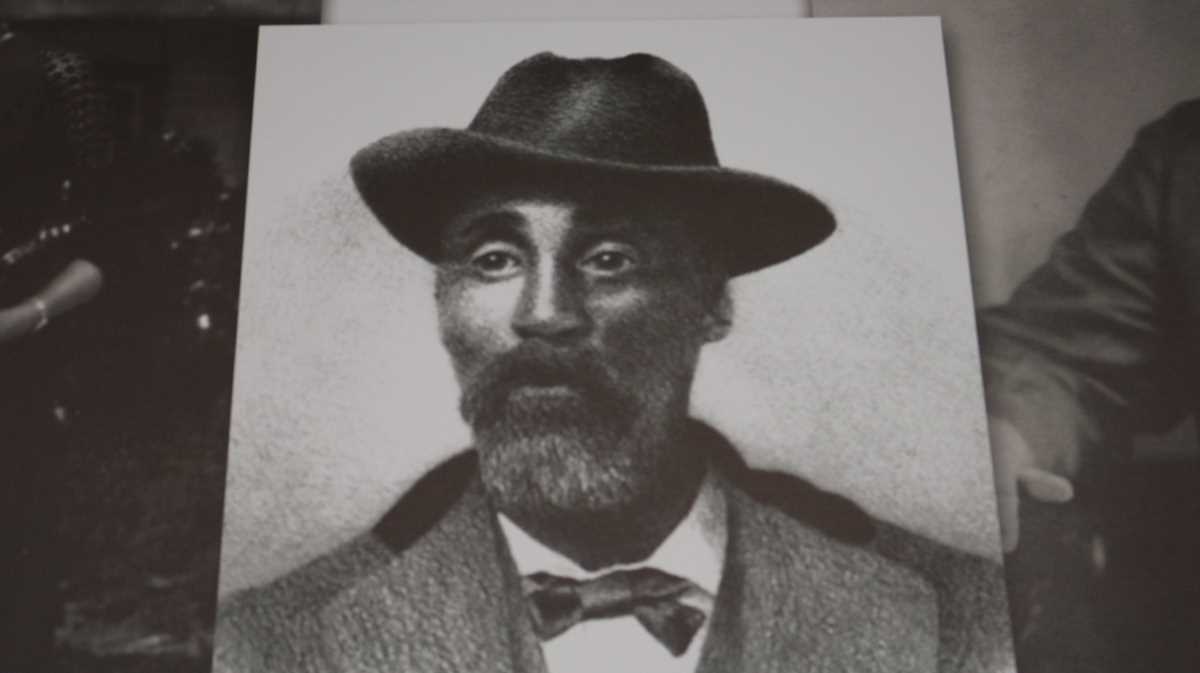
Robert J. Booker, an African-American historian and founder of the Beck Cultural Exchange Center, has researched and published articles on Cal Johnson’s life.
Booker’s research indicates that Johnson’s mother, Harriet McClung Johnson, learned to read and write, as evidenced by the handwritten items in her Bible. She owned and operated a “hotel/restaurant/grocery” store on Willow Street in Knoxville.
Cal Johnson seemed to have inherited a love of horses from his father, Cupid Johnson. Booker says that Cal Johnson’s father was a slave who trained horses and was a winning jockey in the Knoxville area during the mid-1800s. He died, at the age of 49, when Cal was only 14 years old.
So how and when did a former 19th century slave begin amassing his fortune?
Freed from slavery at the age of 21, Cal Johnson started out on the bottom rung of Knoxville's economic ladder. He was awarded a federal contract to take on the grisly task of digging up the bodies of Civil War soldiers who had been buried in temporary graves. He reburied them in the national cemetery or in private cemeteries.
Johnson used the money he earned from these re-interments to open a racetrack and saloons in downtown Knoxville.
Now known as Speedway Circle, the oval stretch of asphalt and surrounding houses in Burlington was once the site of a Cal Johnson racetrack.
The first airplane to travel to Knoxville is said to have landed on Cal Johnson's Burlington racetrack on April 13, 1911. Courtesy of the Beck Cultural Exchange Center.
Johnson opened his first saloon in 1879 on the corner of Gay Street and Wall Avenue. That same year, he ran unsuccessfully for the 5th Ward seat on the Board of Aldermen. But he ran again in 1883 and 1884, winning both times.
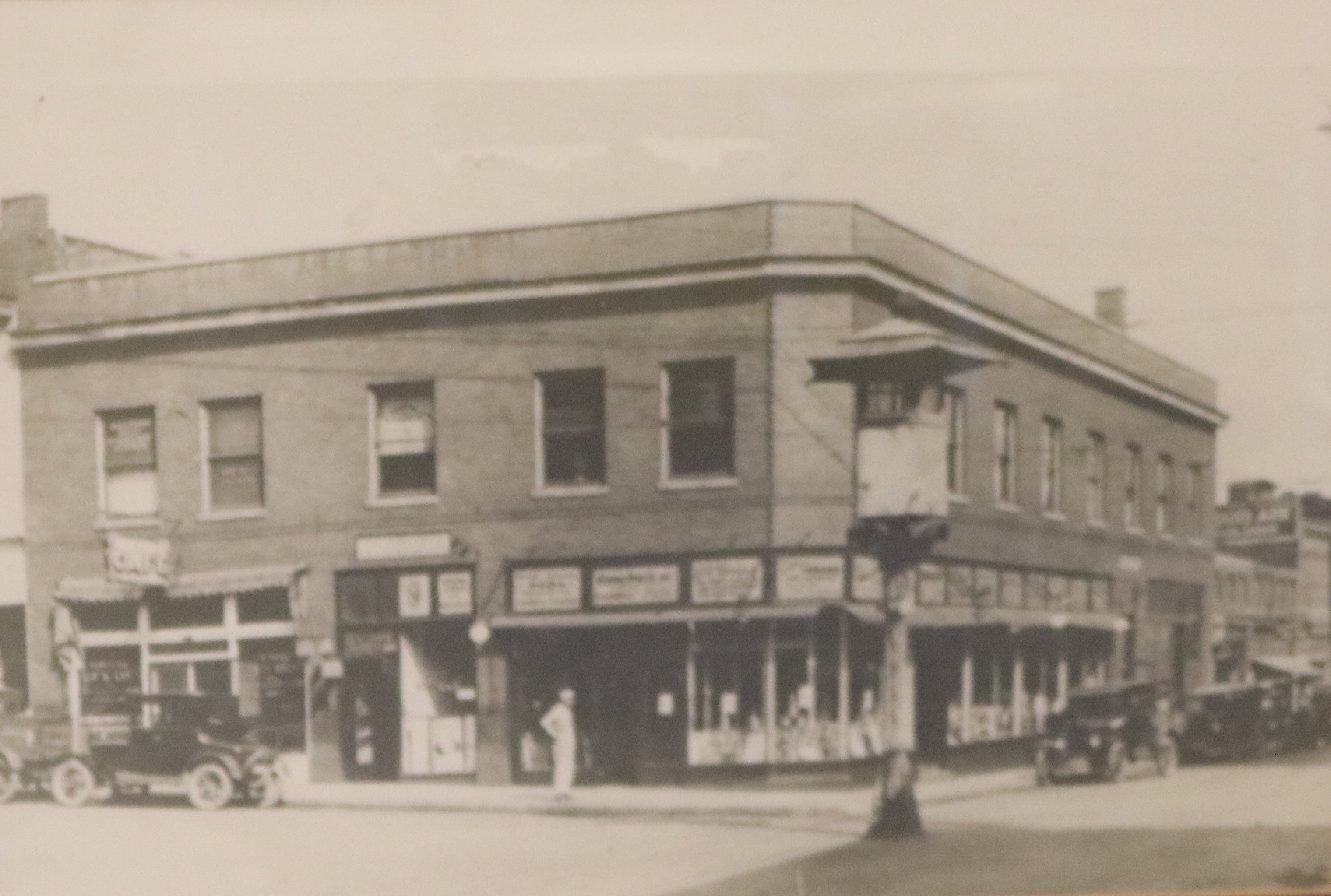
Booker’s research indicates that Cal Johnson donated a house at Vine and Patton streets that was used to open the first African-American YMCA in Knoxville. The donation was made in honor of Johnson’s late wife, Alice, in 1906. Interestingly, when President Theodore Roosevelt dedicated an African-American YMCA in Washington, D.C., in 1908, he praised Cal Johnson for his contributions.
The Johnson business empire took a hit in the early 1900s, when the state of Tennessee outlawed both whiskey and horse racing. Many of Cal Johnson’s businesses were forced to close, although he still had various investments in real estate.
Over the past century, Knoxville’s downtown was remade repeatedly, and the last Cal Johnson-owned building still standing today is a three-story warehouse, constructed in 1898, at 301 State Street. The building housed several Knoxville businesses, including Beeler & Suttle Clothing Manufacturers and later Deaver Dry Good Co.
Knoxville Mayor Madeline Rogero and City Council have taken steps to assure the warehouse, built in the Vernacular Commercial style, will be around for many years to come. The Mayor in December 2015 applied for H-1 protection for the brick warehouse, and the Council last summer voted to apply the overlay protection. An H-1 designation protects a historic structure by requiring review by the Historic Zoning Commission before any permit may be granted for demolition or a significant change to the structure.
“This is one of just a few buildings still standing that reflect the major contributions by African-Americans to the city’s culture and character in the late 1800s and early 1900s,” Mayor Rogero said at the time. “It’s a rare treasure deserving to be safeguarded.”
 Knoxville has recognized Johnson’s legacy in other ways. In 1922, the City established Cal Johnson Park, at what is now 507 Hall of Fame Drive; 35 years later, the Cal Johnson Recreation Center was built in the park.
But it’s always been Johnson’s rise from slavery to build a fortune as a self-made entrepreneur and business leader that has fascinated historians.
So … how much money did Cal Johnson earn in his lifetime?
By the time he died in 1925, Johnson was certainly one of the richest men in Tennessee.
“In the early 1880s, he was worth $75,000, and in just a few years, he doubled that amount of money,” Booker said.
Three years before Cal Johnson’s death, the park carrying his name was established. It was to serve African-American families. The park was dedicated on Sept. 21, 1922, with a crowd of 12,000 people in attendance, Booker said. Johnson himself donated more than $1,250 for amenities that included a water fountain, a flagpole, lights and sidewalks in the park.
Booker says it is important to discuss the achievements of Knoxville's African-American community leaders and innovators. That way, he said, “we can all be viewed as equal partners in the community.”
REV HAROLD MIDDLEBROOK
The Middlebrook Legacy: We Celebrate Black History
Legacy Award honoree, civil rights activist, friend of Dr. Martin Luther King Jr., ordained minister, community leader and loving father—all titles rightfully attributed to the Reverend Harold Middlebrook.
While Middlebrook has called Knoxville home since 1977, he was actually born in Memphis in 1942, he attended Morehouse College and Lemoyne-Owen College, and was ordained a minister in 1966.
More than 10 years after his ordination, he moved to Knoxville to pastor at Mount Calvary Baptist Church.
In the last 4 decades, he has continued his life of service in East Tennessee, including being the founder of the Dr. Martin Luther King Jr. Commemoration Commission of Greater Knoxville.
“Whatever God has given to us, it is our responsibility to share it,” Reverend Middlebrook said. “Each of our children, in their own way, make a contribution to make life better for others.”
Two of Middlebrook’s 3 children do just that as City of Knoxville employees. His oldest daughter, Sherry Bennett, works for Public Service. His youngest child, LaKenya, oversees the City’s first-ever Office of Community Safety.
Reverend and LaKenya Middlebrook sit down to share some of their stories as the City of Knoxville celebrates Black History.
BIG JOHN TATE
On June 6, 2023, the City of Knoxville recognized all of the accomplishments of Heavyweight Champion of the World---Big John Tate by naming a street after him.
A section of Lakeside St. beside Ace Miller Golden Gloves Arena now has the honorary name “Big John Tate Blvd.” The arena is located next to Chilhowee Park & Exposition Center.
Photos from street naming event


Tate was a resident of Knoxville and trained with Ace Miller at Golden Gloves Gym. He went on to earn a bronze medal in boxing at the 1976 Summer Olympics.
At only 24 years old, he captured the WBA Heavyweight Champion of the World title in Pretoria, South Africa during apartheid in 1979. He beat Gerrie Coetzee of South Africa in 15 rounds before 80,000 fans.
On June 6, 1979, Randy Tyree, then mayor of Knoxville, proclaimed the day as "Big John Tate Day". The event was exactly 44 years prior to the street naming.
Tate held the Heavyweight Champion belt for five months before being knocked out in the final round of a fight vs. Mike Weaver in Knoxville on March 31, 1980. Prior to the knockout, Tate had led on all three official scorecards.
He went on to lose to Trevor Berbick and won his next ten bouts, however, he never recovered from those two losses. When his career ended in 1988, he had a 34-3 record that included 23 knockouts.
After a few troubled years, he bounced back to a healthier lifestyle.
On April 9, 1998, Big John died when the pick-up truck he was in hit a telephone pole and flipped on Asheville Highway. Medical reports showed Tate suffered from a brain tumor that triggered a stroke.
WBIR Story of Big John Tate
Check out WBIR's Knoxville's Forgotten Champion: Big John Tate by William Winnett and Elizabeth Sims.
W JAMES TAYLOR

W. James Taylor has always loved the smell of buttery popcorn and the soul-pleasing sounds of the Mighty Wurlitzer organ at the Tennessee Theatre - first as a teenager working as a porter in the 1960s, and now, as an accomplished musician and artist.
In April 1963, Taylor was working when students from Knoxville College were protesting segregation of businesses on Gay Street. He'd never participated in any sit-ins or protests, but he was drawn to the demonstration outside the segregated theater. He quit his job and joined the protest.
Taylor went on to experience different cities and cultures - as an artist and as a drummer in a famous funk band - before returning to Knoxville in 2010.
Read More
The Story of W. James Taylor
In honor of Black History Month, the Tennessee Theatre shared the inspirational story of W James Taylor, who worked as a porter at the theatre in the early 1960’s during the time the theatre (and many other businesses in Knoxville and throughout the South) was still segregated.
W James Taylor was born in April of 1949 and grew up in the Austin Homes and Lonsdale Homes areas of Knoxville as one of eleven children. His mother, Geneva, worked for a wealthy family, taking care of the house and children, and his father worked for OK Rubber Company, Royal Crown, and finally as a janitor at Austin High School. When recounting his childhood, he recalls having eggs and milk delivered by a man with a horse and wagon and thinking that all white men were insurance salesmen. He also remembers meeting the first white student at his school during his sophomore year at Beardsley Junior High.
Read More
ELSON TURNER
Street Named for Elston Turner, Sr.

Friends, family and fans welcomed and celebrated Knoxville native, legendary Austin-East Roadrunner, NBA player and beloved coach Elston Turner at a joyful reception on Monday, February 21, 2022. A street in the new Austin Homes neighborhood will be named for him and officially revealed in May.
• Elston led the Austin-East Roadrunners to win the State Championships in 1977.
• He was named tournament MVP and Tennessee State Athlete of the Year.
• After graduation, Elston was a 2nd round draftee in the NBA in 1981 and played for 15 years.
• He’s been a pro basketball coach for more than 25 years.
• And he’s never forgotten his hometown.
For more than 20 years, the Pro Help Elston Turner Basketball Camp has helped teach youth the fundamentals of basketball and develop life skills.
From Dandridge Ave. to a Lifelong Career in Basketball

Elston Turner grew up in East Knoxville in the Dandridge Avenue area and starred as a basketball player at Vine Jr. High and Austin-East High School. He was All-America and led his the Austin-East Roadrunners team to the first AAA state championship for A-E in 1977.
He attended the University of Mississippi from 1977-1981 and led the Ole Miss Rebels to their first SEC Basketball Championship and its first NCAA appearance in the school’s history. He was also All-SEC in college.
In 1981, he was an NBA 2nd Round Draftee with the Dallas Mavericks. He had an eight year career in the NBA with the Dallas Mavericks, Denver Nuggets and as a teammate to Michael Jordan and Scottie Pippen with the Chicago Bulls. After retiring as a player from the NBA, he became an NBA coach. For the past 20 years he has been an Assistant Coach in the NBA.

Opens in new window
PDF Download
Word Download
Excel Download
PowerPoint Download
Document Download
n located at Gay Street and Vine Avenue.touches on the Cal Johnson images on the interior walls last week.n April 13, 1911. (Courtesy Beck Cultural Exchange Center)ilanthropist Cal Johnson.ck on April 13, 1911. Courtesy of the Beck Cultural Exchange Center.nge Center.Inside of Knoxville.
Opens in new window
PDF Download
Word Download
Excel Download
PowerPoint Download
Document Download
Opens in new window
PDF Download
Word Download
Excel Download
PowerPoint Download
Document Download
Opens in new window
PDF Download
Word Download
Excel Download
PowerPoint Download
Document Download